

3m³ (3000 liters) LOX, LIN, LAr, LCO2, and LNG Microbulk Tanks
3m³ (3000 liters) LOX, LIN, LAr, LCO2, and LNG Microbulk Tanks
Overview
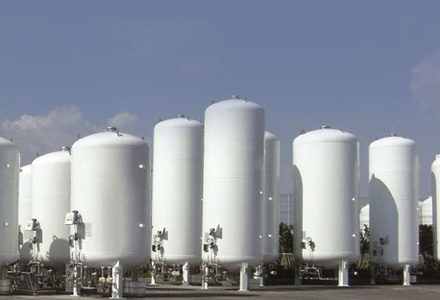
Mobile Cryogenic Microbulk Tanks are compact, highly efficient storage systems designed for the safe and reliable handling of cryogenic liquids such as Liquid Oxygen (LOX), Liquid Nitrogen (LIN), Liquid Argon (LAr), Liquid Carbon Dioxide (LCO2), and Liquefied Natural Gas (LNG). These tanks serve as a miniaturized version of bulk storage systems, offering a superior alternative to traditional high-pressure or liquid cylinders. HNJS's mobile microbulk tanks are engineered with stainless steel, cryogenic storage capabilities, and are available in capacities ranging from 1,000 liters (1m³) to 5,000 liters (5m³). They are designed to meet diverse operational needs with customizable low, medium, and high-pressure options.
Specifications for 3m³ (3000 liters) LOX, LIN, LAr, LCO2, and LNG Microbulk Tanks
| Model | CDLS-3/1.6 | CDLS-3/2.6 | CDLS-3/3.4 | CDLS-3/1.6 | CDLS-3/2.2 |
|---|---|---|---|---|---|
| Pressure Rating | Low | Medium | High | Low | Medium |
| Surface Treatment | Polish / Painting | Polish / Painting | Polish / Painting | Polish / Painting | Polish / Painting |
| Thermal Insulation | High vacuum multi-layer insulation | ||||
| Base Support | Steel bearing, forklift-compatible | ||||
| Total Volume (m³) | 3.18 | 3.18 | 3.18 | 3.34 | 3.18 |
| Effective Volume (m³) | 3.0 | 3.0 | 3.0 | 3.0 | 3.0 |
| Max Working Pressure (MPa) | 1.6 | 2.6 | 3.4 | 1.6 | 2.2 |
| Design Standards | GB/T 150.1~GB/T 150.4; GB/T 18442; Q/NMHJ 20-2017 | ||||
| Medium & Max Loading Weight (kg) | |||||
| - LO2 | 3420 | 3420 | 3420 | - | - |
| - LN2 | 2430 | 2430 | 2430 | - | - |
| - LAr | 4230 | 4230 | 4230 | - | - |
| - LCO2 | - | - | - | - | 3087 |
| - LNG | - | - | - | 1278 | - |
| Daily Evaporation Rate (LN2) | ≤0.6% | ≤0.6% | ≤0.6% | ≤0.6% | ≤0.6% |
| Gas Supply Capacity (Nm³/h) | 40 | 40 | 40 | 40 | 40 |
| Empty Tank Weight (kg) | |||||
| - Stainless Steel (SS) | 1849 | 1983 | 2223 | 1893 | 2394 |
| - Carbon Steel (CS)* | 1973 | 2023 | 2263 | 1936 | 2428 |
| Dimensions (mm) | 1850x1850x2945 | 1850x1850x2945 | 1850x1850x2945 | 1850x1850x3050 | 1850x1850x2945 |
Note: Carbon Steel (CS) outer shells require sandblasting and painting for enhanced durability.
Key Features and Benefits of HNJS Mobile Microbulk Tanks
Unmatched Convenience
Ensures uninterrupted supply of cryogenic liquids.
Integrated Linde supply management with telemetry for real-time monitoring.
Eliminates the need for cylinder handling and change-outs, reducing operational complexity.
Streamlines inventory management, minimizing storage requirements.
Enhanced Productivity and Cost Savings
Reduces downtime associated with cylinder replacements.
No residual product loss, ensuring full utilization of supplied materials.
Simplifies accounting and ordering processes for better efficiency.
Requires minimal inventory maintenance, freeing up resources.
Optimizes labor utilization and production space.
Lowers overall maintenance costs compared to traditional cylinder systems.
Superior Quality Assurance
Delivers consistent high-purity cryogenic liquids.
Enhances product yield and operational efficiency.
Provides a uniform and reliable supply of gases.
Advanced Safety Features
Eliminates risks associated with cylinder handling.
No concerns about cylinder leaks or high-pressure hazards.
Replaces high-pressure cylinders with safer, low-pressure storage solutions.
Why Choose HNJS Mobile Microbulk Tanks?
HNJS's mobile microbulk tanks are designed to meet the highest industry standards, offering a perfect blend of convenience, safety, and efficiency. Whether for industrial, medical, or research applications, these tanks provide a reliable and cost-effective solution for cryogenic liquid storage and supply. With customizable pressure ratings, robust construction, and advanced thermal insulation, HNJS ensures optimal performance and long-term durability for your operations.
Invest in HNJS mobile microbulk tanks to revolutionize your cryogenic storage and supply chain, achieving greater productivity, safety, and cost efficiency.



Comments