

How to Decide Between Vertical and Horizontal Cryogenic Storage Tanks?
How to Decide Between Vertical and Horizontal Cryogenic Storage Tanks?
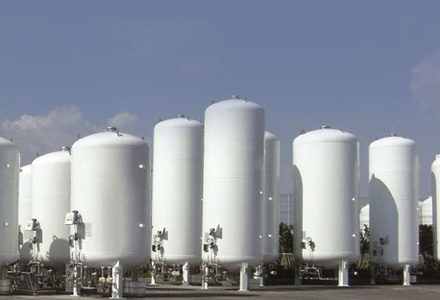
Cryogenic storage tanks are specialized equipment designed to store low-temperature liquids such as liquefied natural gas (LNG), liquid oxygen (LOX), and liquid nitrogen (LIN). These tanks are essential in industries ranging from healthcare to energy, where the safe and efficient storage of cryogenic substances is critical. When deciding between vertical and horizontal cryogenic storage tanks, several key factors must be evaluated to ensure optimal performance and suitability for your specific needs.
1. Space Constraints and Layout
One of the primary considerations is the available space at your facility. Vertical cryogenic storage tanks are known for their compact footprint, making them ideal for locations with limited ground area. They are often preferred in urban settings or facilities where space is at a premium. On the other hand, horizontal cryogenic storage tanks require more horizontal space but may offer advantages in terms of accessibility and integration with existing infrastructure. Assess your site’s spatial limitations and layout to determine which configuration aligns best with your operational requirements.
2. Liquid Level Management
Maintaining a stable liquid level is crucial for the efficient operation of cryogenic storage systems. Vertical tanks excel in this aspect due to their design, which allows liquids to naturally stabilize through gravitational forces. This ensures consistent liquid levels and minimizes the risk of pressure fluctuations. In contrast, horizontal tanks may face challenges in liquid level control, as the liquid distribution is influenced by the tank’s orientation and requires additional mechanisms to counteract gravitational effects. If precise liquid level management is a priority, vertical tanks may be the more reliable option.
3. Structural Stability and Environmental Factors
Stability is a critical factor, especially in regions prone to extreme weather conditions. Vertical cryogenic storage tanks are inherently stable due to their lower center of gravity, making them highly resistant to wind loads and seismic activity. This design reduces the need for extensive external support structures. Horizontal tanks, while offering their own advantages, often require additional anchoring and support systems to ensure stability, particularly in areas with high wind speeds or seismic risks. Evaluate your facility’s environmental conditions to determine which tank type offers the necessary stability and safety.
4. Maintenance and Operational Efficiency
Ease of maintenance and operational efficiency are also important considerations. Vertical cryogenic storage tanks are generally easier to access and maintain due to their straightforward design and compact layout. This can lead to reduced downtime and lower maintenance costs over the tank’s lifespan. Horizontal tanks, while offering easier access for certain types of maintenance, may require more complex procedures and equipment for routine inspections and repairs. Consider your team’s capabilities and the long-term operational demands when making your decision.
5. Application-Specific Requirements
The choice between vertical and horizontal tanks may also depend on the specific application and industry. For example, vertical tanks are often favored in medical and laboratory settings where space is limited, and precise liquid management is essential. Horizontal tanks, with their larger storage capacity and ease of integration into pipeline systems, are commonly used in industrial and energy sectors. Assess your application’s unique requirements to determine which tank type aligns with your operational goals.
Conclusion
Choosing between vertical and horizontal cryogenic storage tanks involves a careful evaluation of space availability, liquid level control, structural stability, maintenance needs, and application-specific factors. Vertical tanks are ideal for compact spaces and environments requiring high stability, while horizontal tanks offer advantages in terms of capacity and integration. By considering these factors, you can select the cryogenic storage solution that best meets your operational and logistical needs, ensuring safe and efficient storage of low-temperature liquids.




Comments